
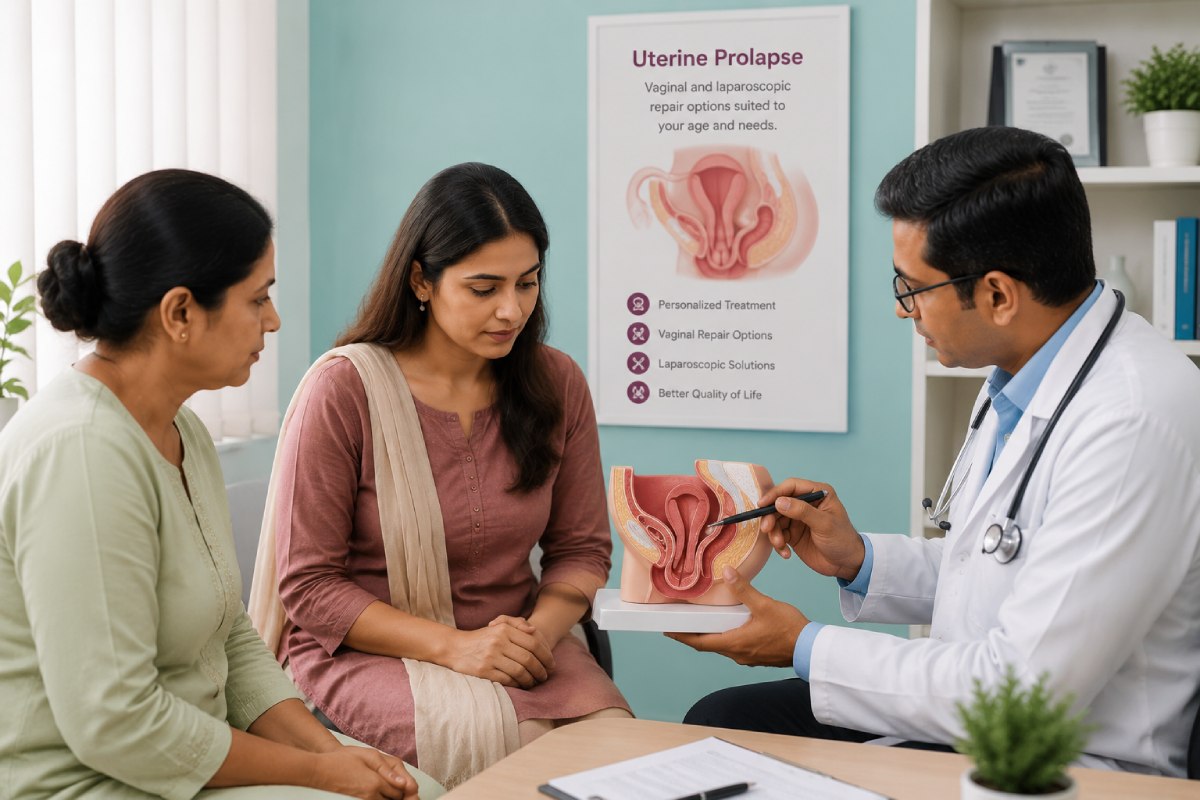
Overview
A feeling of something coming down, backache or urinary leakage after multiple deliveries can be signs of pelvic organ prolapse. Early evaluation can help identify the severity and the most suitable treatment approach.
Prolapse can be effectively managed at different stages of life. Treatment is planned according to the severity of prolapse, your symptoms, age, health and personal preferences.
What is included
- Staging examination and bladder assessment
- Pelvic floor physiotherapy for early stages
- Ring pessary option for elderly patients
- Vaginal hysterectomy with pelvic floor repair
- Uterus-preserving laparoscopic sling surgery
Restoring comfort and pelvic support
Pelvic organ prolapse can affect daily comfort, bladder function and confidence. The right treatment depends on the stage of prolapse, symptoms and your individual circumstances.
Early or mild prolapse may respond to pelvic floor exercises or a pessary. When surgery is needed, both vaginal and uterus-preserving procedures may be considered depending on your age, health and future needs.
Frequently asked questions
Can prolapse be treated without surgery?
Yes. Mild cases may improve with pelvic floor exercises and, when suitable, a pessary. The treatment approach depends on the severity of prolapse and your symptoms.
Must the uterus be removed?
Not always. Depending on your age, health and future pregnancy or reproductive preferences, uterus- preserving repair may be an option for suitable patients.
Can prolapse come back after treatment?
Prolapse can sometimes recur after treatment. Maintaining pelvic floor strength and following your doctor's recovery and follow-up recommendations can help support long-term pelvic health.


