
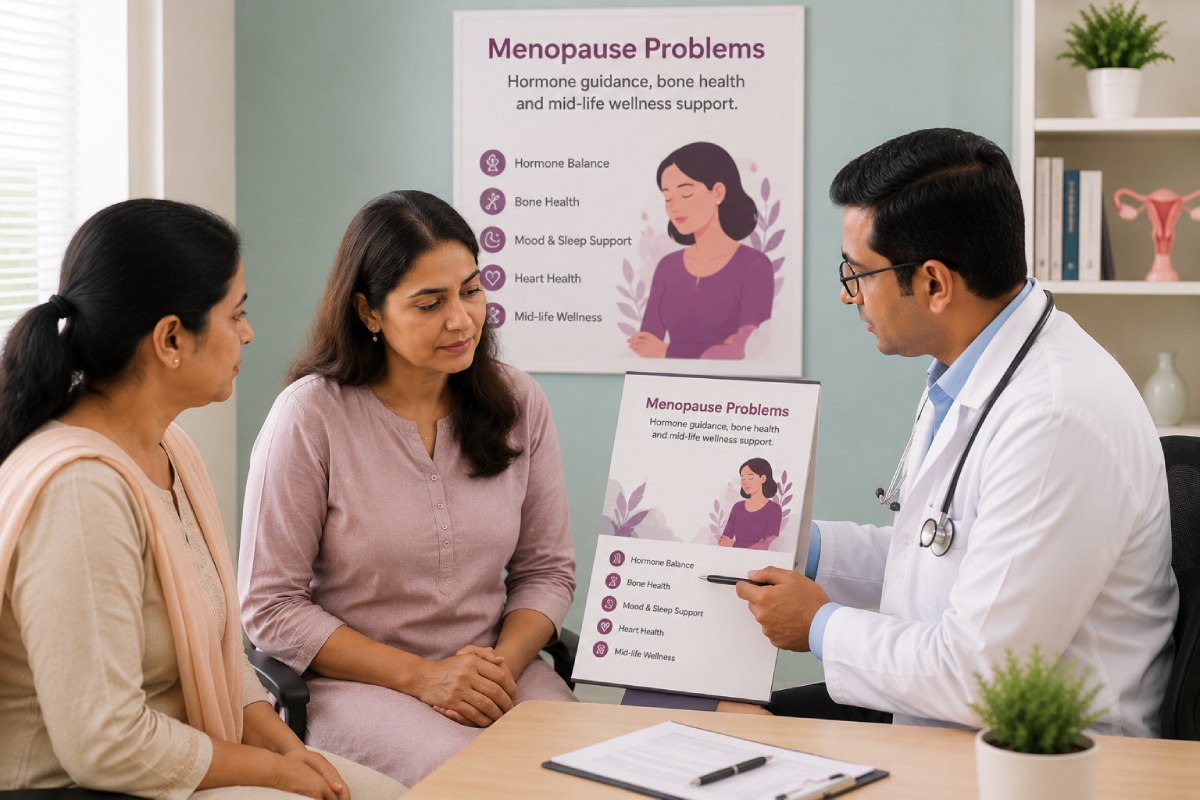
Overview
Hot flushes, mood changes, vaginal dryness and changes in bone health are common around menopause, but you do not have to simply endure symptoms that affect your daily life.
Personalised mid-life care focuses on managing symptoms, protecting bone and cardiovascular health and supporting your overall wellbeing through the years after menopause.
What is included
- Symptom assessment and hormone evaluation
- Safe hormone replacement where suitable
- Calcium, vitamin D and bone density guidance
- Heart and cholesterol screening
- Sleep, mood and intimacy counselling
Healthy ageing beyond menopause
Menopause is a natural stage of life, but the hormonal changes around this time can affect sleep, mood, bones, heart health and intimate wellbeing. A personalised assessment can help identify the areas that need attention.
Depending on your symptoms and personal health risks, care may include lifestyle guidance, symptom treatment, bone health support and hormone therapy when appropriate. Regular preventive screening remains an important part of long-term women's health.
Frequently asked questions
Is hormone therapy safe?
Hormone therapy can be a suitable option for many healthy women, particularly when started around the time of menopause. Your personal medical history, symptoms and individual risks should be assessed before treatment.
Do I still need check-ups after menopause?
Yes. Regular health check-ups remain important after menopause. Pelvic examinations and age-appropriate screening can help monitor your ongoing women's health.
Can menopause affect bone health?
Yes. The hormonal changes associated with menopause can contribute to bone loss. Your doctor can assess your individual risk and advise on nutrition, exercise, vitamin D, calcium and bone-density testing when appropriate.


