
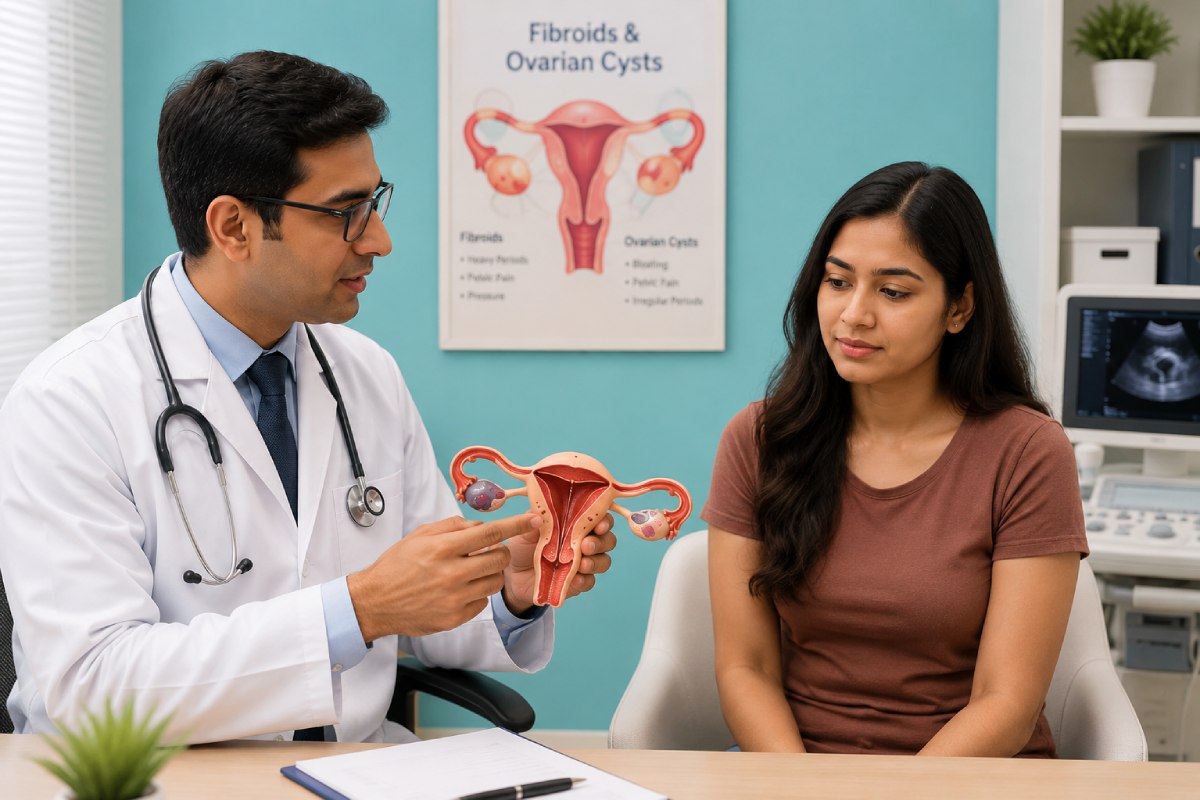
Overview
Not every fibroid or ovarian cyst needs surgery. Many harmless or symptom-free conditions can simply be monitored with regular follow-up and appropriate imaging.
When fibroids or cysts cause heavy bleeding, pain, pressure or fertility concerns, we discuss the most suitable treatment. Where surgery is required, minimally invasive keyhole techniques may be considered whenever appropriate.
What is included
- Accurate sizing and mapping on sonography
- Medical management for small, symptom-free lesions
- Laparoscopic myomectomy and cystectomy
- Fertility-preserving surgical techniques
- Hysterectomy only when truly required
Treatment planned around your needs
Fibroids and ovarian cysts can vary considerably in size, location and symptoms. Treatment decisions depend on factors such as your symptoms, scan findings, age and whether you are planning a pregnancy.
When surgery is needed, fertility-preserving options may be considered for suitable patients. Our aim is to avoid unnecessary surgery while providing effective treatment when intervention is genuinely required.
Frequently asked questions
Do fibroids turn into cancer?
Fibroids are usually benign and malignant transformation is very rare. Regular clinical follow-up and imaging may be recommended depending on your symptoms and individual condition.
Can I get pregnant after fibroid removal?
Yes. Myomectomy removes fibroids while preserving the uterus and may be an option for women who wish to maintain fertility. Your individual fertility outlook depends on several factors.
Do all ovarian cysts require surgery?
No. Many ovarian cysts are harmless and may resolve or remain stable without surgery. Treatment depends on the cyst's appearance, size, symptoms and other individual factors.


